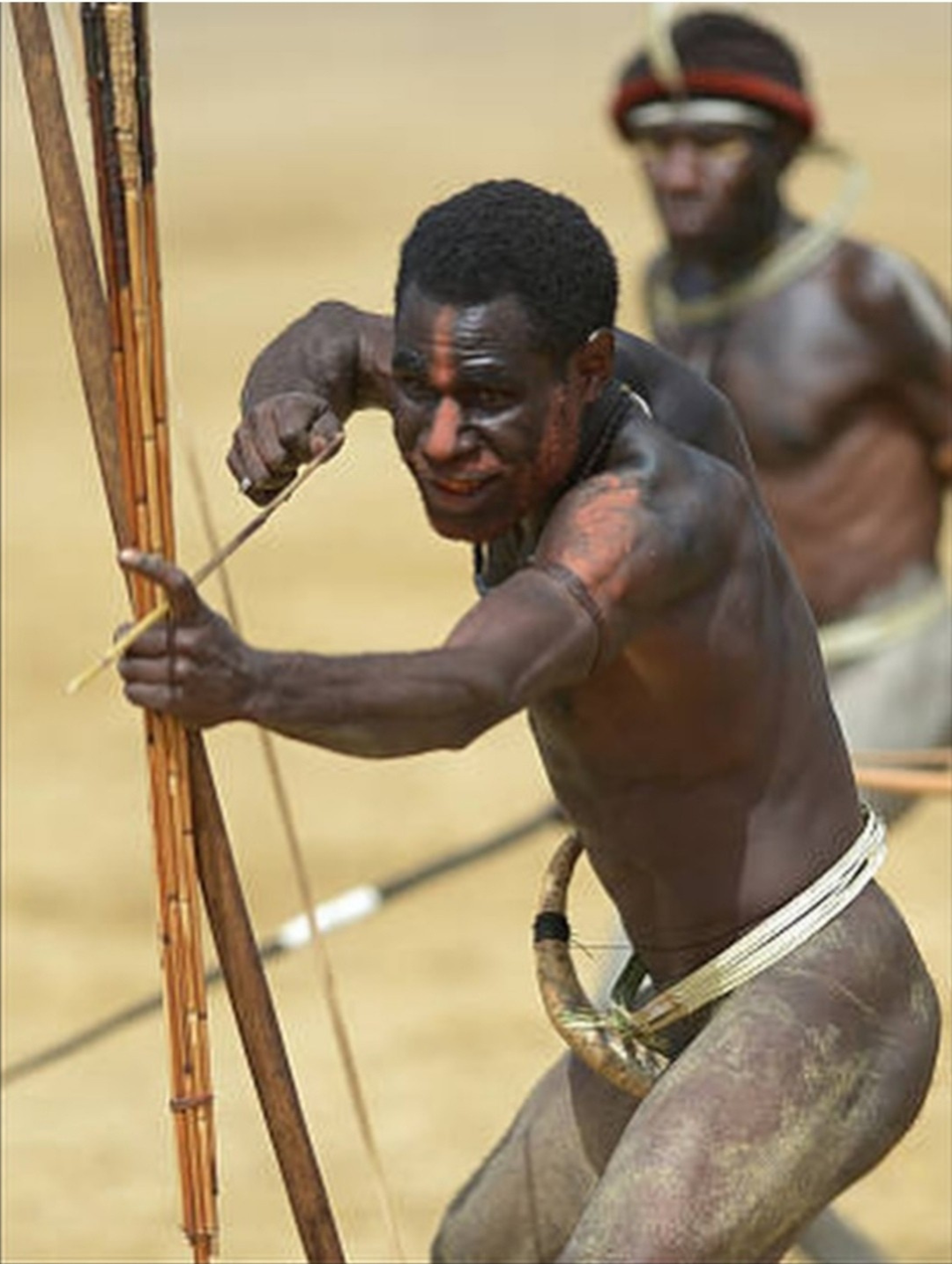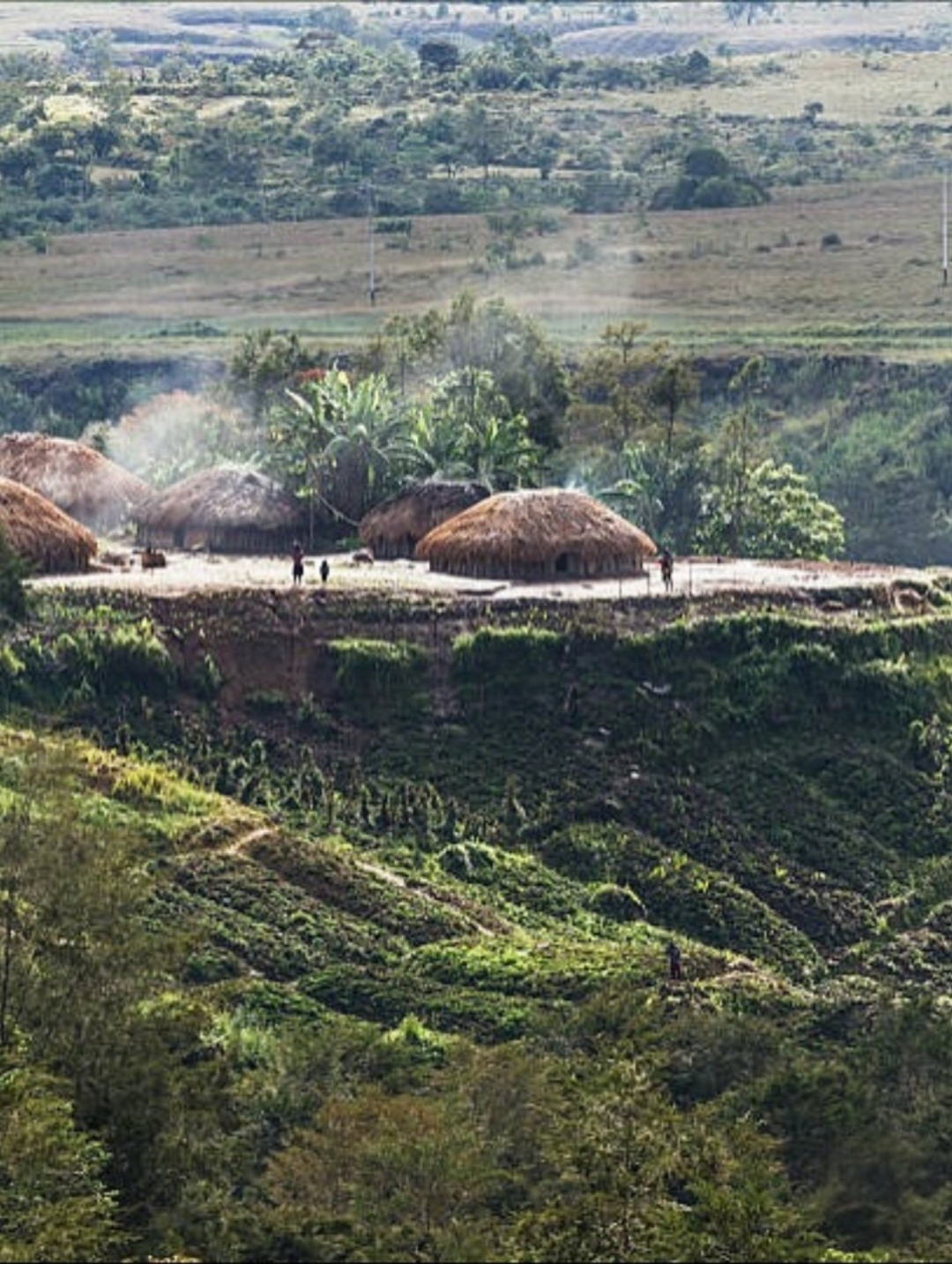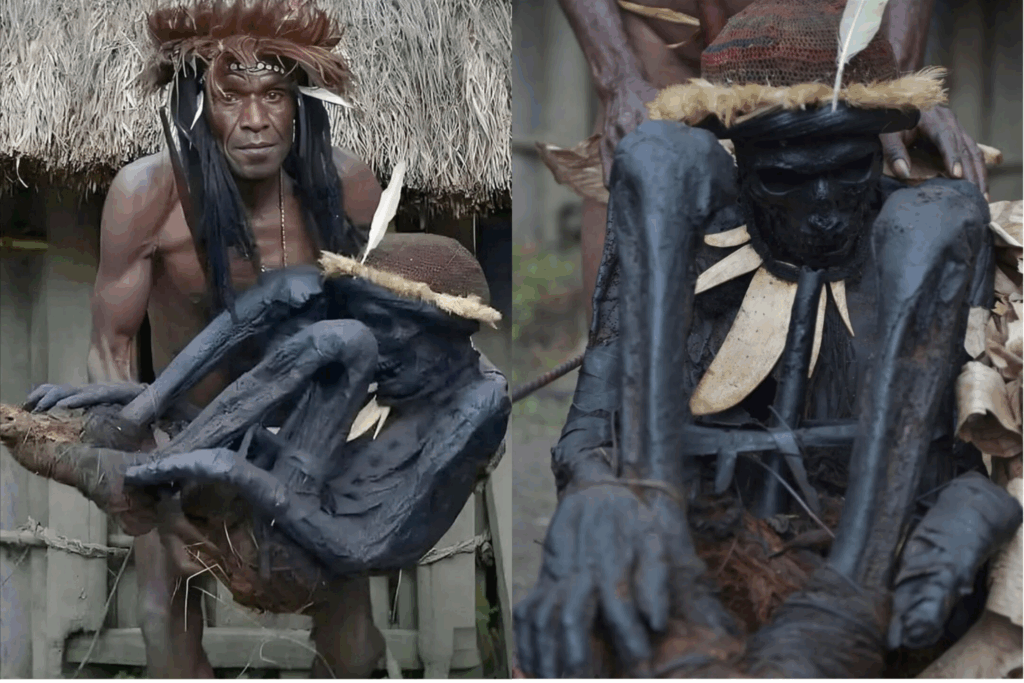
In the highlands of West Papua, Indonesia, Chief Eli Mabel stands as one of the last guardians of an ancient tradition. He holds in his arms the mummified remains of his ancestor, Agat Mamete Mabel, a respected leader who ruled the village of Wogi nearly 250 years ago. For the Dani people, this is not just history. It is family, memory, and identity all preserved in a single form.
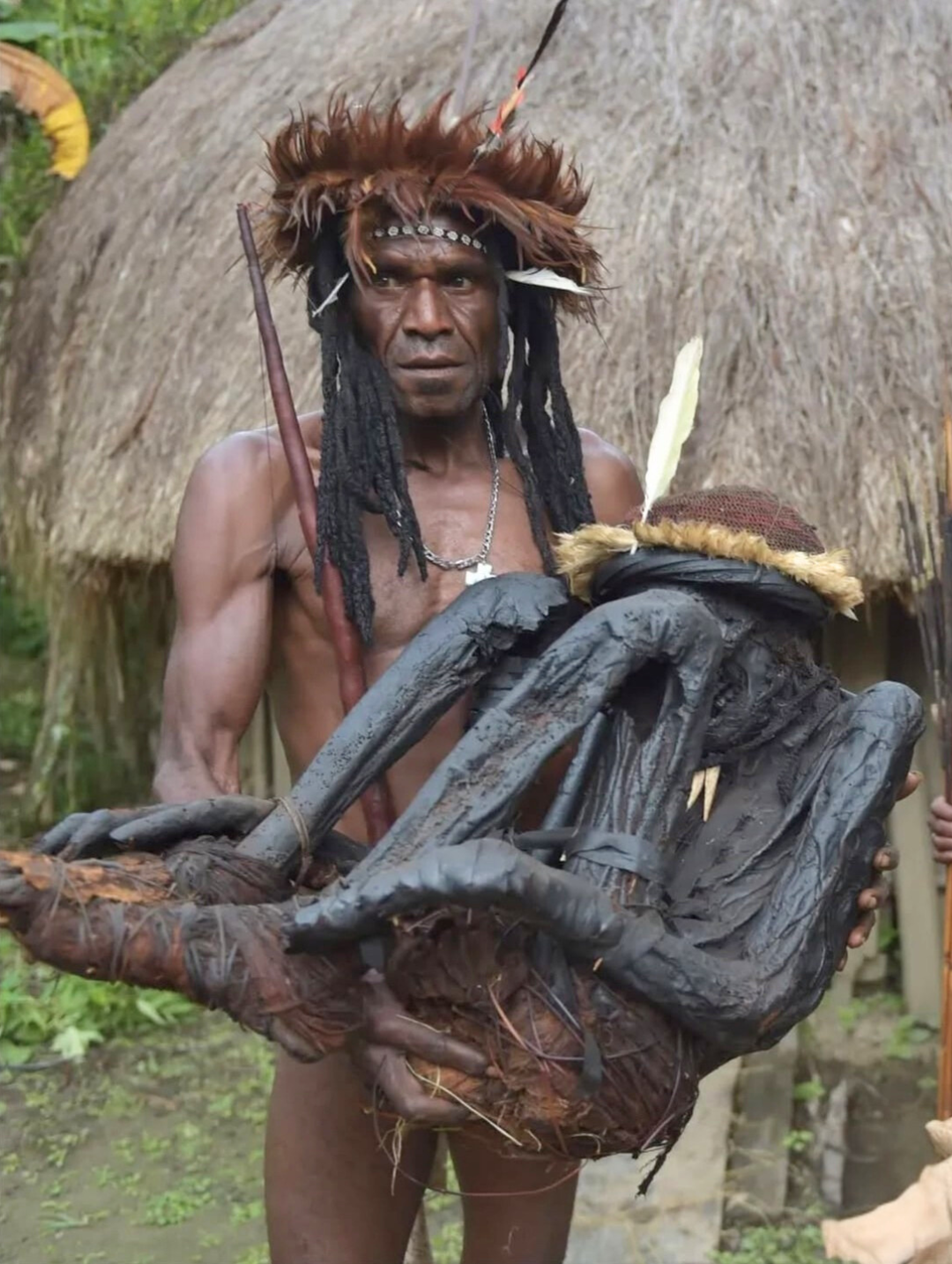
The Dani practice a rare tradition known as smoke mummification. When a great leader dies, the body is dried under the sun, exposed to hot smoke for weeks, and carefully coated in lard to help it remain intact for centuries. Every wrinkle, every bone, every detail becomes a frozen link to the tribe’s past. It is a way of keeping their leaders close, even long after death.

Chief Eli Mabel takes this responsibility seriously. He spends nights inside the small hut where the mummy is kept, protecting it from harm and making sure the rituals continue. To him, this is not a relic. It is his grandfather’s grandfather, still watching over the village. As he once said in an interview, “If we forget our ancestors, we forget who we are.”
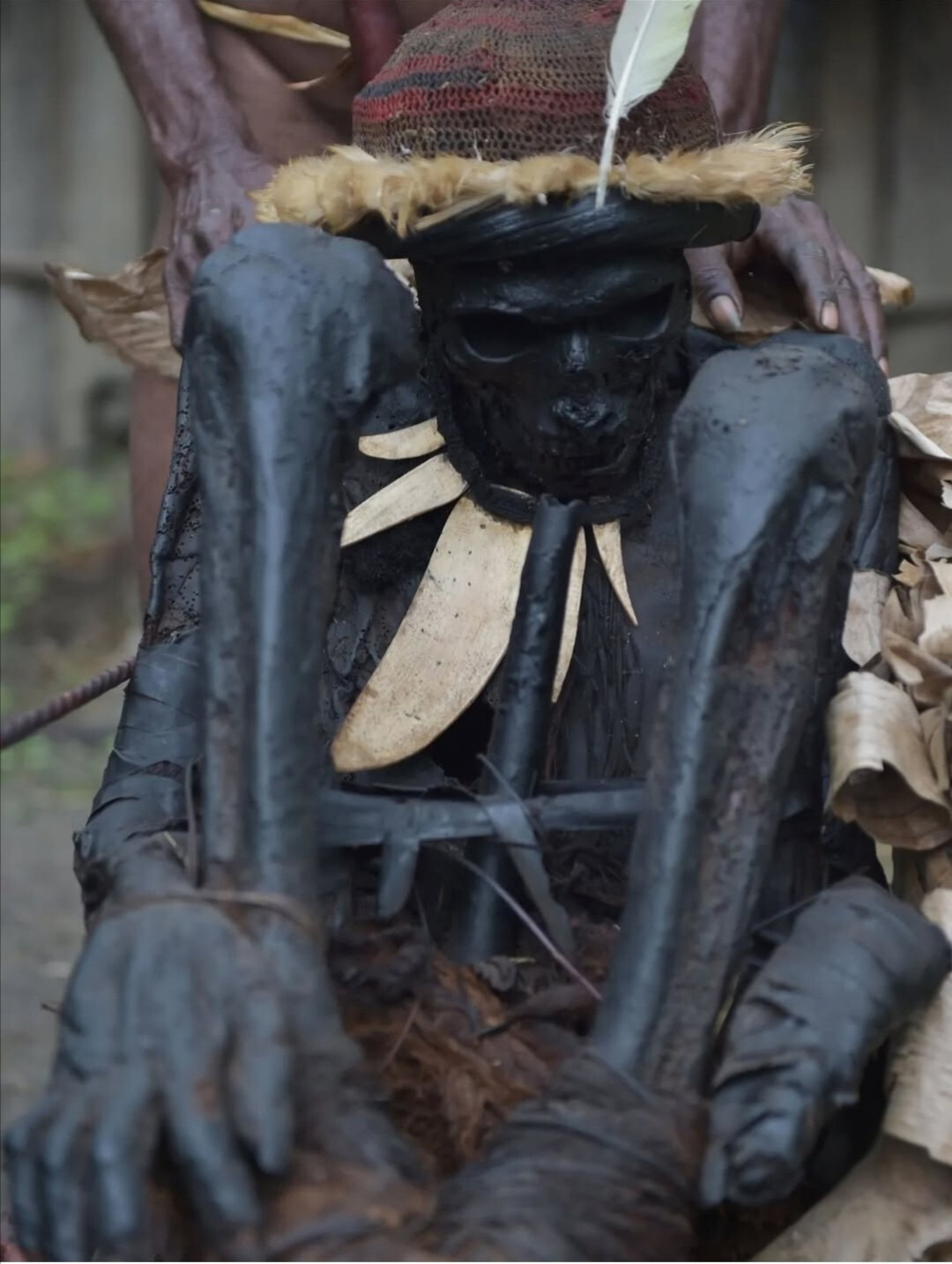
Tourists sometimes visit Wogi to see the mummy, but for the Dani, this tradition is not for spectacle. It is a living reminder of the bond between the people and their heritage. The mummy of Agat Mamete Mabel is a symbol of leadership, continuity, and the deep respect that holds the Dani community together.