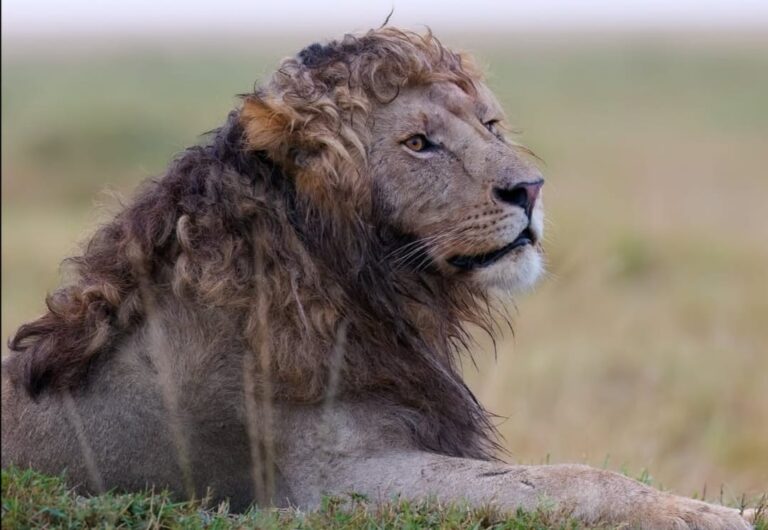
The image shows a lion with unusual facial features caused by a genetic abnormality, something that happens most often in captive breeding centers where inbreeding is common. Many people online say it looks similar to Down syndrome in humans, but experts clarify that lions cannot have Down syndrome because it is a human-specific condition. What they can suffer from are deformities and developmental issues linked to poor breeding practices.
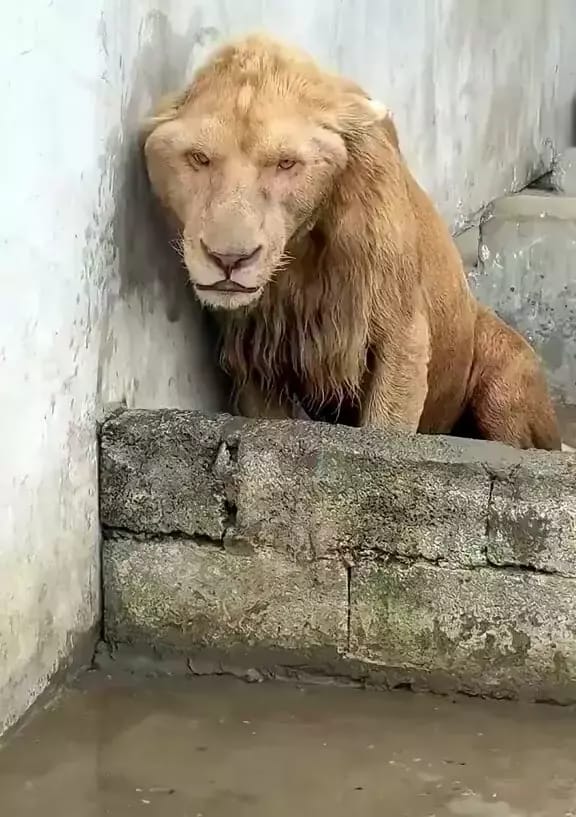
Animals born into these environments sometimes have weakened immune systems, shorter lifespans, or physical differences that affect how they grow. In this lion’s case, the soft, rounded face and uneven features are signs of a genetic disorder that likely began long before it was born. It is a shows of how captivity, especially in unregulated facilities, can affect wildlife in ways that are rarely seen in the wild.
Despite its condition, the lion in the photo still shows the same gentle curiosity found in all big cats. People who have cared for animals like this say they often display calm and affectionate behaviors. One wildlife caregiver once explained, “They just want to live like any other lion. The tragedy is not their face. It is the choices humans made before they were even born.”
Photos like this spark important conversations about responsible breeding, conservation, and the value of protecting animals in their natural habitats, where nature—not humans—decides how life unfolds.